
Scientific reproducibility depends on a frequently underestimated factor: the authenticity of cell lines. Understand why validating cellular identity is no longer optional in preclinical research.
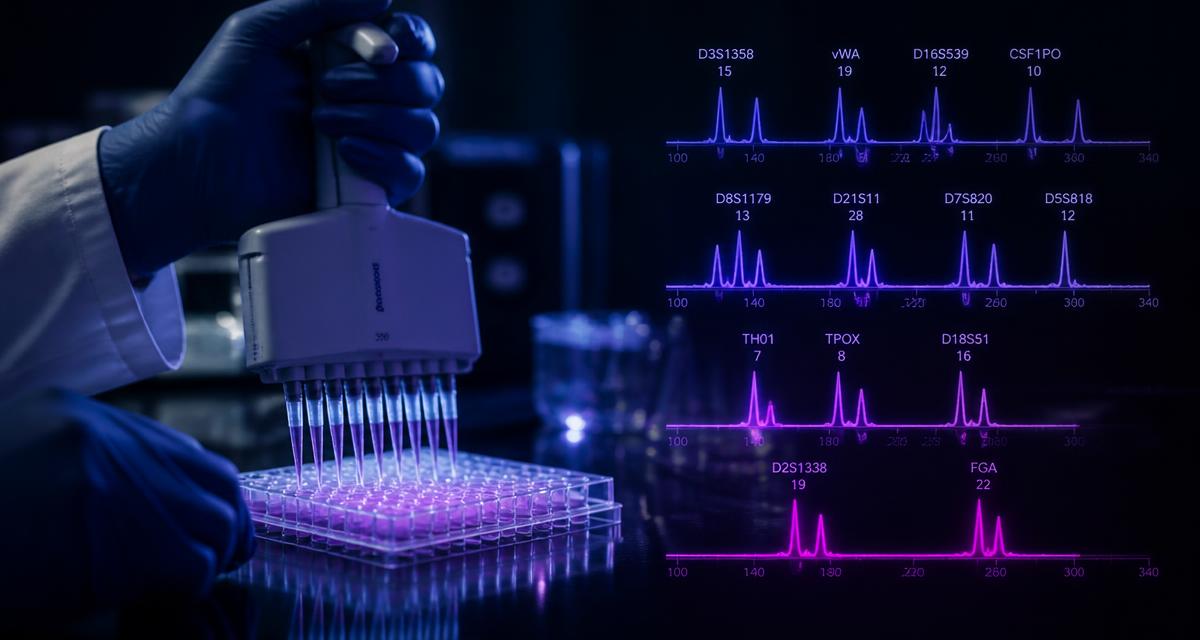
Scientific reproducibility has become one of the most critical pillars of contemporary research. In a landscape increasingly driven by robust data and rigorous validation, a frequently underestimated factor remains one of the main causes of experimental inconsistency: the authenticity of the cell lines in use.
Cell line authentication is not merely an additional technical step; it is a fundamental requirement to ensure that results from basic and preclinical studies are reliable, reproducible and scientifically valid. Even so, several studies indicate that a significant share of published research may be compromised by contaminated or misidentified cells.
This article explores the central role of cell authentication in the modern scientific context, highlighting its strategic importance — particularly in Brazil — and showing how advanced technological approaches have transformed this landscape.
Scientific context
Cell lines are indispensable tools in biomedical research. They enable the investigation of molecular mechanisms, toxicity assessment, pharmacological testing and disease modeling in controlled environments. Their usefulness, however, depends directly on the reliability of their identity.
Since the 1960s there have been records of cross-contamination in cell cultures, the most emblematic case being the HeLa line, which contaminated many other cultures over time (Masters, 2002). This phenomenon compromises individual experiments and creates a cascade effect across multiple derived studies.
It is estimated that between 15% and 20% of the cell lines used in research are contaminated or misidentified (Capes-Davis et al., 2010). That figure exposes a critical gap between available technology and its practical application in research workflows.
The problem: a silent failure at the foundation of research
Using non-authenticated cell lines can lead to significant consequences, often imperceptible in the short term: inconsistent or irreproducible experimental results; mistaken biological interpretations; loss of time and financial resources; compromised scientific publications; and negative impact on therapy development.
There are also direct implications for the pharmaceutical and biotech industries, where strategic decisions are frequently based on preclinical data. An error in cell identity can invalidate months or years of development.
This raises an essential question: how do you guarantee that the cell model in use truly corresponds to what you intend to study?
Technical background: what is cell line authentication?
Cell line authentication verifies the genetic identity of a cell culture, confirming its origin and detecting possible contamination or sample swaps.
Although different approaches exist, the central concept involves comparing the sample's genetic profile against reference databases.
When should authentication be performed?
Authentication should not be seen as an isolated step, but as part of a continuous quality-control flow. Key moments include: receiving a new cell line; after multiple culture passages; before critical experiments or publication; and after thawing cryopreserved stocks.
Application in scientific practice
In preclinical research, cellular authenticity is a determining factor for the validity of results. Cell models are widely used for compound efficacy testing, toxicity assessment, gene expression studies and signaling pathway analysis.
If the line in use is not the correct one, the entire experimental rationale can be compromised.
Impact on therapy development
Authentication failure produces direct effects on the development pipeline: incorrect selection of drug candidates; failures in subsequent in vivo or clinical assays; higher development costs; and regulatory delays.
In a landscape where the average cost of developing a new drug can exceed billions of dollars, ensuring the quality of early data is not merely desirable — it is essential.
Strategic discussion: scientific reliability and decision-making
The reliability of scientific data is directly tied to the quality of experimental inputs. In that sense, cell line authentication acts as a risk mitigation mechanism.
International institutions such as the NIH (National Institutes of Health) have already established rigorous guidelines requiring cell authentication as a criterion for research funding (NIH, 2015).
This reflects a paradigm shift: experimental validation is no longer a differentiator, it is a baseline requirement.
Key strategic benefits
Increased scientific reproducibility; reduced R&D risk; greater credibility in publications; confidence in decision-making; and alignment with regulatory requirements.
Brazilian context: challenges and opportunities
In Brazil, the discussion around cell line authentication is still consolidating. Although research centers and universities have advanced significantly in infrastructure, standardizing practices remains a challenge.
Among the main critical points: limited access to specialized services; lack of protocol standardization; low awareness in some research areas; and dependence on validations performed abroad.
On the other hand, this scenario also represents a strategic opportunity. Expanding national infrastructure capable of performing cell authentication with high technical rigor strengthens scientific research in the country, reduces operating costs, speeds up innovation projects and increases technological autonomy.
In this context, companies with expertise in molecular biology and experimental validation play a fundamental role in supporting researchers, universities and industry in developing more robust and reliable studies.
Conclusion
Cell line authentication is no longer an optional practice; it has become a central element in building more robust, reliable and reproducible science.
Where strategic decisions depend directly on the quality of experimental data, ensuring the identity of the cell models in use is a fundamental step — not only for scientific integrity, but also for R&D efficiency.
Technology already allows rigorous validation protocols to be implemented, and incorporating them into workflows represents a significant competitive advantage.
In the Brazilian context, consolidating this practice points to a more independent, innovative future aligned with international standards, especially when supported by technical structures able to offer specialized support in molecular biology and experimental validation.
Scientific references
ATCC. (2010). Cell line misidentification: the beginning of the end. https://pubmed.ncbi.nlm.nih.gov/20448633/
Capes-Davis, A. et al. (2010). Check your cultures! A list of cross-contaminated or misidentified cell lines. https://pubmed.ncbi.nlm.nih.gov/20143388/
Freedman, L. P. et al. (2015). The economics of reproducibility in preclinical research. https://pubmed.ncbi.nlm.nih.gov/26057340/
Masters, J. R. (2002). HeLa cells 50 years on: the good, the bad and the ugly. https://pubmed.ncbi.nlm.nih.gov/12001993/
NIH. (2015). Consideration of sex as a biological variable in NIH-funded research. https://orwh.od.nih.gov/sites/orwh/files/docs/not-od-15-102_guidance_508.pdf